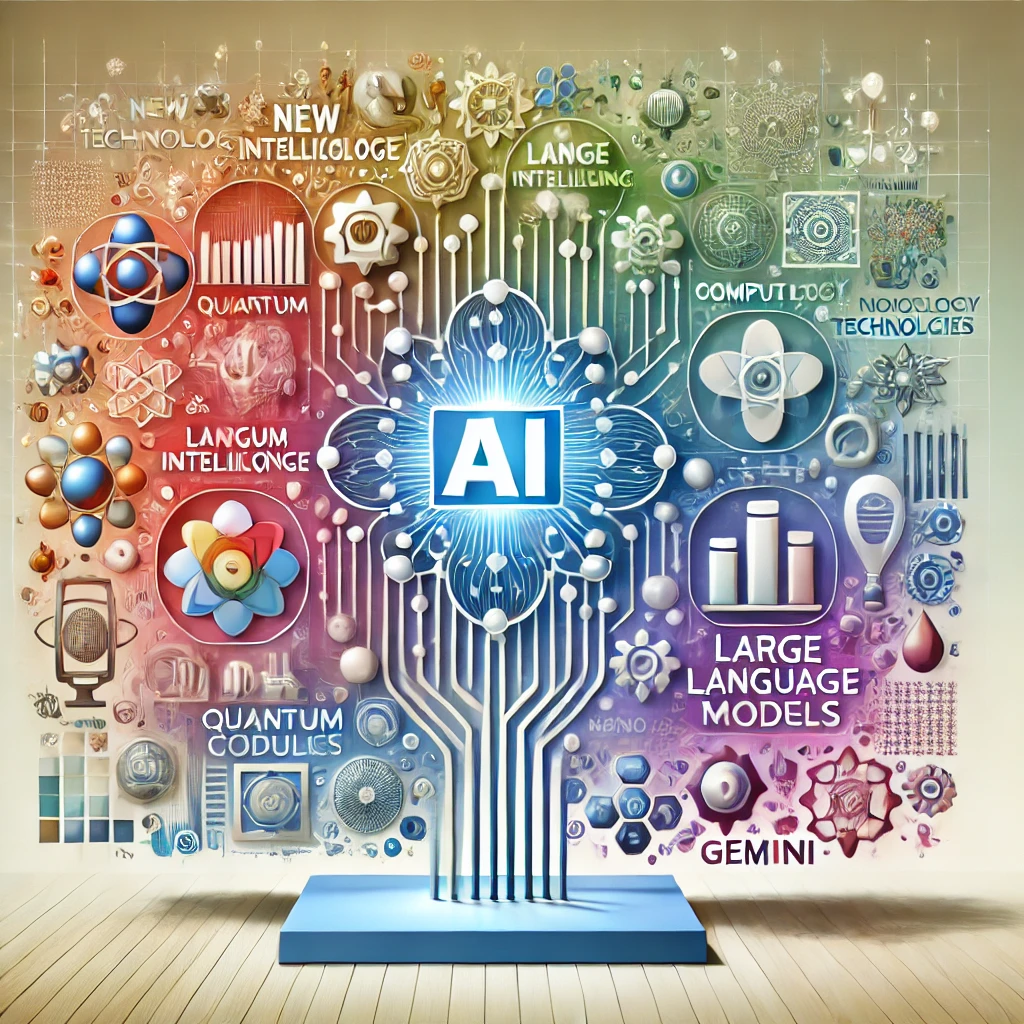
New Technologies
The advent of new technologies has transformed various scientific fields, pushing the boundaries of what is possible and leading to significant advancements in our understanding of the world. This section delves into some of the most impactful and rapidly evolving areas, including Artificial Intelligence and Machine Learning, Quantum Computing, Biotechnology, Nanotechnology, and Renewable Energy Technologies.
Artificial Intelligence and Machine Learning
Artificial Intelligence (AI) and Machine Learning (ML) have revolutionized how we interact with technology, enabling machines to learn from data, adapt to new inputs, and perform tasks that typically require human intelligence.
Deep Learning: At the core of modern AI, deep learning uses neural networks to model complex patterns in data. Convolutional networks excel in image processing tasks such as recognizing objects in images, while recurrent networks are adept at handling sequential data like speech or text. Reinforcement learning, another subset of deep learning, involves training algorithms to make a sequence of decisions, often used in robotics and game-playing AI. These technologies are foundational in advancing autonomous systems and are behind the successes in fields like image recognition, language translation, and self-driving cars.
Natural Language Processing (NLP): NLP enables machines to understand, interpret, and generate human language. This includes tasks like text analysis, sentiment detection, and language modeling. Conversational AI, such as ChatGPT, uses advanced NLP techniques to generate human-like text responses, making interactions with machines more intuitive. NLP technologies are widely applied in chatbots, virtual assistants, and automated customer service.
Computer Vision: This field of AI focuses on enabling machines to interpret and make decisions based on visual data. Applications include image recognition, object detection, and video analysis, which are crucial for areas like surveillance, medical imaging, and autonomous vehicles. Computer vision algorithms can identify objects within images, track movements, and even understand scenes at a high level, driving innovations in everything from healthcare to retail.
Robotics: Robotics integrates AI and automation to create machines capable of performing tasks autonomously. From robotic process automation in industries to human-robot interaction in healthcare and service sectors, robotics is transforming how work is done. Autonomous systems like drones and self-driving cars rely heavily on robotics to navigate and operate in complex environments without human intervention.
Data Science: The explosion of big data has made data science an essential discipline. It involves extracting meaningful insights from large datasets through techniques such as predictive modeling and data mining. Data science is pivotal in sectors like finance, healthcare, and marketing, where it drives decision-making and helps in identifying trends, predicting outcomes, and optimizing operations.
Quantum Computing
Quantum computing represents a paradigm shift in computation, leveraging the principles of quantum mechanics to perform calculations far beyond the capabilities of classical computers.
Quantum Algorithms: Quantum algorithms like Shor's algorithm for factoring large numbers and Grover's algorithm for searching unsorted databases showcase the potential of quantum computing. These algorithms can solve specific problems exponentially faster than classical algorithms, making them particularly promising for cryptography, optimization, and complex simulations.
Quantum Cryptography: This field explores the use of quantum mechanics to secure communication. Quantum key distribution (QKD) ensures that any attempt at eavesdropping on a communication channel will be detected, making it impossible for hackers to intercept messages undetected. As quantum computers advance, post-quantum cryptography aims to develop encryption methods that remain secure against quantum attacks.
Quantum Hardware: The building blocks of quantum computers include qubits, quantum gates, and error correction mechanisms. Qubits, unlike classical bits, can exist in superpositions of states, allowing quantum computers to perform many calculations simultaneously. Quantum gates manipulate qubits through operations that form the basis of quantum circuits, while error correction techniques are essential to maintaining the integrity of quantum information in the presence of noise.
Biotechnology
Biotechnology is the application of biological systems and organisms to develop products and technologies that improve the quality of life.
CRISPR and Gene Editing: CRISPR-Cas9 has revolutionized gene editing, allowing precise modifications to DNA. This technology holds immense potential for therapeutic applications, including the treatment of genetic disorders, cancer, and infectious diseases. However, it also raises ethical considerations, particularly around the potential for gene editing in human embryos and the long-term impacts on future generations.
Synthetic Biology: Synthetic biology involves designing and constructing new biological parts, devices, and systems. It merges biology and engineering to create organisms with tailored functions, such as bacteria that can produce biofuels or detect environmental toxins. Synthetic genomes, entirely constructed in laboratories, represent the pinnacle of synthetic biology, pushing the boundaries of what can be achieved in bioengineering.
Biomedical Engineering: This interdisciplinary field combines principles of engineering with biological sciences to develop medical devices, biomaterials, and tissue engineering solutions. Innovations include prosthetics, artificial organs, and drug delivery systems that improve patient outcomes. Biomedical engineering is at the forefront of developing technologies that enhance human health and quality of life.
Nanotechnology
Nanotechnology deals with manipulating matter at the atomic and molecular scale to create new materials and devices with enhanced properties.
Nanomaterials: Materials like carbon nanotubes, graphene, and quantum dots exhibit unique properties due to their nanoscale dimensions. These materials are used in a wide range of applications, from electronics to medicine, where they provide improved strength, conductivity, or reactivity compared to their bulk counterparts.
Nanoelectronics: Nanoelectronics focuses on creating electronic components at the nanoscale, such as molecular electronics, nanoscale transistors, and spintronics. These technologies are driving the miniaturization of electronic devices, leading to faster and more energy-efficient computing.
Nanomedicine: Nanotechnology is revolutionizing medicine through innovations like targeted drug delivery, where nanoparticles deliver drugs directly to diseased cells, minimizing side effects and improving efficacy. Nanomedicine also includes the development of nanosensors for early disease detection and diagnostic tools that operate at the molecular level.
Renewable Energy Technologies
The push for sustainability has driven significant advancements in renewable energy technologies, providing cleaner alternatives to fossil fuels.
Solar Energy: Solar technologies harness the sun’s energy to generate electricity and heat. Photovoltaic cells convert sunlight directly into electricity, while solar thermal systems use mirrors or lenses to concentrate solar energy for heating or power generation. Concentrated solar power (CSP) plants further enhance the efficiency of solar energy production by focusing sunlight onto a small area to produce steam that drives turbines.
Wind Energy: Wind turbines capture kinetic energy from wind and convert it into electricity. Innovations in turbine design, including offshore wind farms, have increased the efficiency and output of wind energy. Wind farm optimization focuses on positioning turbines to maximize energy capture while minimizing environmental impact.
Energy Storage: As renewable energy sources like solar and wind are intermittent, efficient energy storage solutions are critical. Batteries, particularly lithium-ion, are the most common form of energy storage, while supercapacitors and hydrogen storage offer alternative solutions for longer-duration storage and quick energy discharge.
Smart Grids: Smart grids integrate renewable energy sources with traditional power grids, allowing for more efficient distribution and consumption of electricity. They employ advanced monitoring and automation to balance supply and demand in real-time, incorporating distributed energy resources and demand response strategies to improve grid reliability and resilience.